Among the claims you might have seen: Fair Trade, Direct Trade, USDA Organic, Rainforest Alliance, and a few more. But the Smithsonian Institution’s Bird Friendly coffee stands apart for its environmental rigor.
Developed by the Smithsonian Migratory Bird Center, the Bird Friendly certification is widely considered the gold standard for sustainable coffee. It is built around strict, measurable ecological standards rather than broad, unenforceable sustainability language.
For specialty coffee platforms, roasters, and consumers, understanding this certification helps separate specific environmental commitments from vague marketing. It also creates a clearer path for discovering coffees and roasters that are helping preserve some of the world’s most vulnerable ecosystems.
To better understand what the certification means, and why it matters now, we spoke with Kirstin Hill, the Smithsonian Bird Friendly Program Manager.
Hill explains the certification plainly: “Smithsonian Bird Friendly certified coffee is grown in a way that’s good for birds and biodiversity. Coffee is grown underneath and alongside diverse, native shade trees that provide important habitat for wildlife.”
The True Cost of Sun-Grown Coffee
To set the stage for the importance of the Smithsonian Bird Friendly certification, it helps to look at how commercial coffee farming has changed over time.
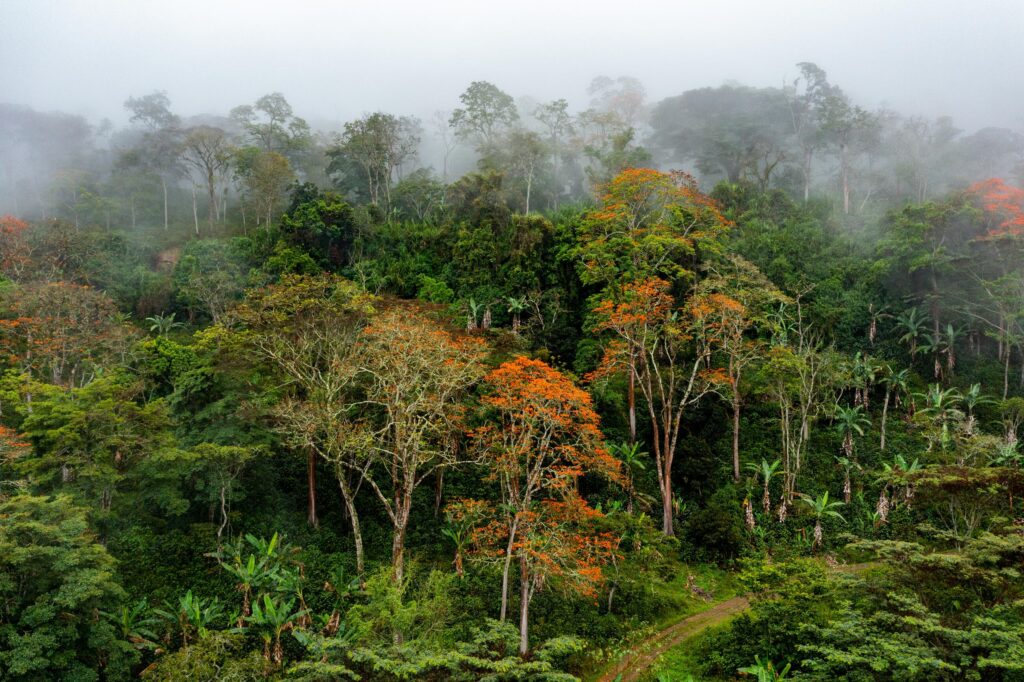
Historically, coffee grew as an understory crop beneath tropical forest canopies. This traditional agroforestry system preserved wildlife habitats, supported soil health, and helped protect water systems.
That model changed significantly during the late 1980s and 1990s, when international aid organizations and governments encouraged farmers to clear forests and shift toward sun-grown monoculture plantations. These systems were promoted as a way to increase yields and combat fungal diseases such as coffee leaf rust.
The result was a short-term emphasis on volume that came with long-term ecological costs: deforestation, habitat loss, soil erosion, and increased reliance on synthetic fertilizers and pesticides.
Deforestation is often in the news as numerous countries and governments struggle to limit deforestation, including from illegal mining or conversions to agriculture. Hill described one of the program’s core standards as a “zero deforestation” policy.
“Any coffee that holds the Bird Friendly certification comes from farms that haven’t been deforested or converted to agriculture for a period of at least ten years,” Hill said.
Deforestation does more than remove tree cover. It eliminates carbon sinks, weakens soil stability, disrupts water systems, and destroys habitat for birds, insects, mammals, and other forms of biodiversity.
Despite some positive policy shifts, deforestation is not going away. A 36% year-over-year reduction in tropical rainforest loss from 2024 to 2025 still meant a loss of 10.6 million acres in 2025, roughly equivalent to the land areas of Massachusetts and Connecticut combined.
Climate change compounds the issue. As temperatures rise, suitable coffee-growing land can shift upward in elevation, placing new pressure on remaining forested areas.
The Bird Friendly certification was created in the late 1990s in the midst of these changes in coffee agriculture.
Inside the Smithsonian Bird Friendly Criteria
Many sustainability certifications accept partial compliance, a sliding scale, or a minimum percentage of certified components. The Smithsonian Bird Friendly program takes a stricter approach, committing to 100% organic, deforestation-free coffee that actively conserves biodiversity through agroforestry and forest conservation methods.
Farmers cannot qualify by leaving a few scattered trees on their land. They must meet specific, scientifically verified forestry standards.
1. At least 40% canopy cover
Certified farms must maintain a dense canopy layer covering at least 40% of the cultivated area.
2. A tall, layered forest structure
The main canopy trees must reach a minimum height of 12 meters. This height helps create the layered forest structure birds need for nesting, feeding, and protection.
3. Diverse native tree species
The canopy cannot be made up of a single non-native commercial timber species. Bird Friendly standards require at least 11 distinct tree species, with native varieties dominating the mix. Farms must also include a strong understory layer with shrubs and companion plants.
4. Organic certification as the baseline
The Bird Friendly certification also requires valid organic certification before a farm can apply. This helps ensure that synthetic chemicals do not disrupt the food webs that make these agroforestry systems function.
These standards and distinctions matter because “shade-grown” is not the same thing as Bird Friendly. Hill said one of the common questions consumers ask is whether all shade-grown coffee qualifies.
“Folks also often ask us if all shade-grown coffee is Bird Friendly,” Hill said. “It’s not.”
In other words, shade is only the starting point. The Bird Friendly certification looks at the density, height, diversity, and ecological structure of that shade system, along with organic production standards.
Why Bird Friendly Adoption Can Be Difficult
The strictness of the certification is what makes it meaningful. It is also what makes adoption difficult for some producers.
One major barrier is the organic requirement.
“If a producer isn’t yet farming organically, it can be a big undertaking to make the switch from conventional to organic,” Hill said. “Organic certification can be expensive for some producers and the transition process can take a few years to complete.”
Demand is another challenge. Even when producers are farming in ways that support forest habitats, they still need buyers who understand the value of the certification and are willing to seek out these coffees.
Hill said awareness has been growing.
“We’ve been working to grow our network of importers and roasters interested in purchasing Bird Friendly coffee,” Hill said. “We’re proud to say that our program has quadrupled in size in the past five years, with more and more coffee companies seeking out Bird Friendly.”
How Shade Can Improve Coffee Quality
The benefits of the Bird Friendly model extend beyond bird conservation. Shaded conditions are also known to produce higher quality coffee.
When coffee trees grow beneath a thick canopy, they receive filtered sunlight and benefit from cooler microclimates. These lower temperatures can slow the maturation of coffee cherries, extending the ripening period and allowing more complex sugars to develop in the seed. That slower development can contribute to a deeper and more nuanced flavor profile in the cup.
Shade trees also support the soil. Falling leaves create a natural mulch layer that adds organic matter, retains moisture, and helps prevent erosion on steep mountain slopes during heavy rains.
A diverse canopy can also serve as a natural pest management system. Migratory birds, bats, and beneficial insects help control pests, including the coffee berry borer. This biological control reduces reliance on synthetic chemical pesticides and supports a more resilient farm ecosystem.
The Ecological Impact of Bird Friendly Coffee
Choosing Bird Friendly coffee can create measurable benefits for biodiversity.
The program now protects more than 42,000 acres of high-quality habitat worldwide. Its network includes more than 4,000 coffee growers across origins such as Mexico, Peru, Ethiopia, and Laos. Together, these farms bring over 30 million pounds of sustainably grown coffee to the global market each year.
The impact on bird populations is especially striking. Smithsonian field studies show how closely these farms can mimic natural forest habitat.
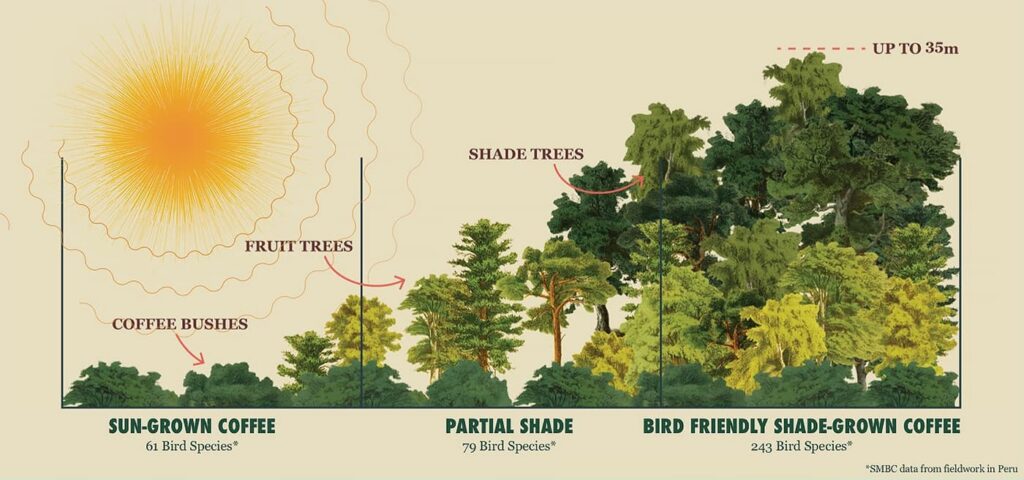
Sun-grown coffee fields in the study hosted 61 bird species. Partially shaded farms hosted 79. True Bird Friendly shaded environments hosted 243 distinct bird species.
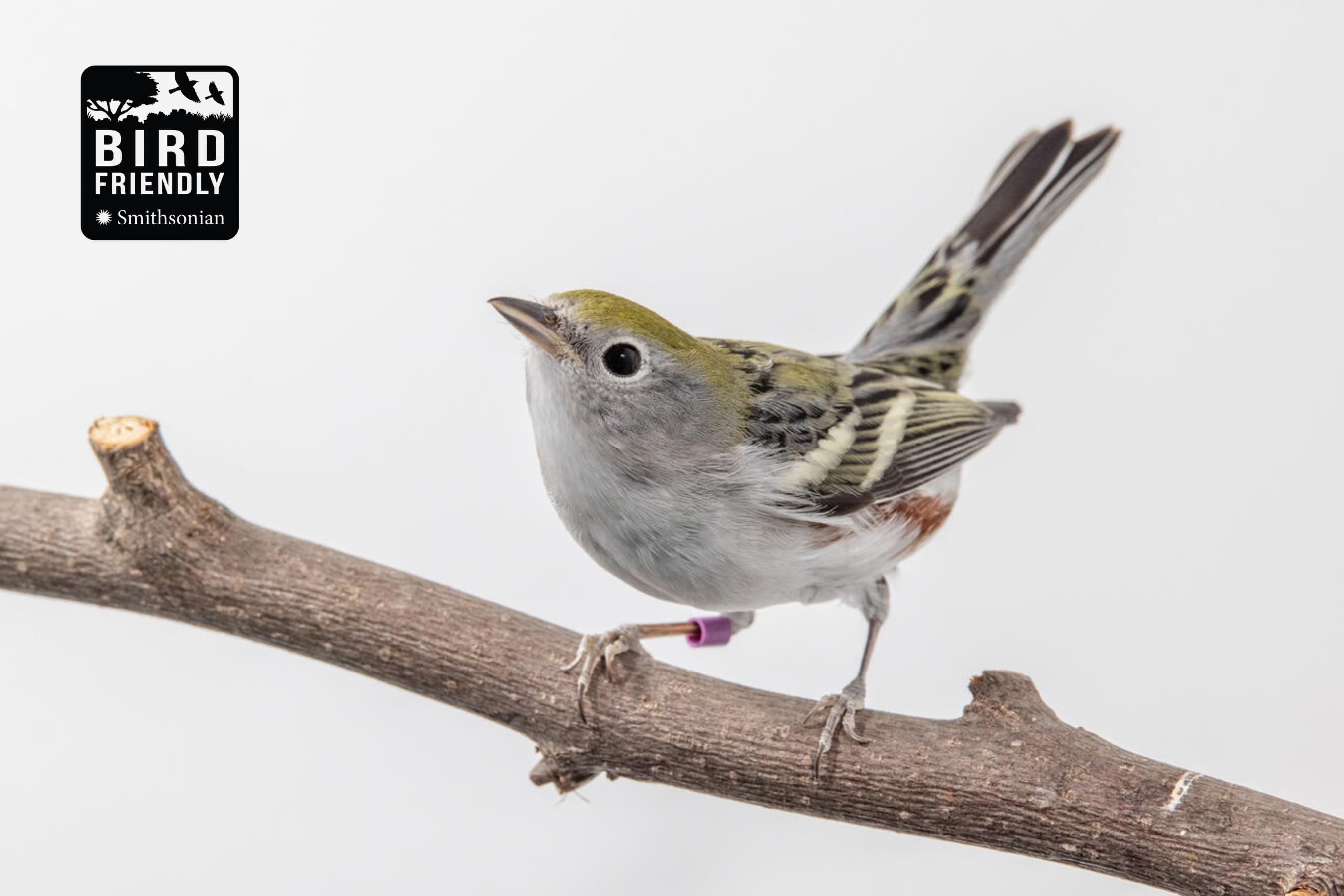
For migratory songbirds, these farms can serve as vital habitats during long journeys between North America and the tropics.
Why Bird Friendly Coffee Matters for Roasters and Coffee Platforms
For specialty coffee platforms, roasters, and consumers, the Smithsonian Bird Friendly certification offers a clear market signal.
Specialty coffee consumers are often looking for more than price alone. They want high quality, transparent coffees with credible environmental commitments.
The Bird Friendly seal helps cut through ambiguous sustainability language. Because the standards are strict, the certification leaves less room for greenwashing or partial compliance.
For roasters, carrying Bird Friendly coffees can communicate a real commitment to sustainability. For platforms like Lightyear, these coffees also fit naturally into a broader mission: helping people discover coffees that are compelling not only for how they taste, but for the farming and economic systems they support.
Consumers also have a direct role in expanding the market for these coffees. Hill said one of the most effective ways coffee drinkers can support biodiversity is to ask for Bird Friendly certified coffee from the roasters they already buy from.
“We’ve repeatedly heard that consumer demand is what moves the needle for coffee companies,” Hill said.
The certification can also help smallholder farmers receive higher prices for their crops. That premium matters because maintaining an organic agroforest is labor-intensive. If producers are not compensated for those practices, sustainable coffee farming becomes harder to maintain.
Preserving the financial viability of Bird Friendly coffee is also important for land-use decisions. When coffee becomes less profitable than other crops or land uses, farms may be converted away from coffee altogether. Supporting Bird Friendly farms helps make conservation-oriented coffee production more economically viable.
What Lightyear’s Data Shows
In Lightyear’s quarterly single origin benchmarking report, we track the prices and coffee offerings of 250 small roasters.
Our Q1 2026 report included 1,870 single-origin coffees, and of those, only 29 (1.6%) carried the Bird Friendly certification.
That small sample makes it difficult to establish a statistically significant relationship between the Bird Friendly certification and retail price. But from the consumers and roasters we have spoken with, the pattern is clear: when the education piece is there, demand and willingness to pay can follow.
The Future of Smithsonian Bird Friendly Coffee
As the coffee industry faces rising temperatures, shifting growing regions, and pressure on existing farmland, the Bird Friendly model feels especially relevant.
Hill framed the urgency clearly.
“As temperatures rise, it becomes more difficult to grow and requires producers to go further and further up in elevation, which can lead to more deforestation as forests are converted to farmland. That’s why it’s so important to support Bird Friendly certified farms now.”
In other words, Bird Friendly coffee is not just about protecting birds. It is about protecting forests, supporting farmers, preserving biodiversity, and helping build a more resilient future for coffee.
Summary
The Smithsonian Bird Friendly program is one of the most rigorous sustainability certifications in coffee. It requires farms to be 100% organic and deforestation-free, with specific standards for active biodiversity conservation including canopy cover, tree height, species diversity, and forest structure.
Those standards help protect migratory birds, preserve tropical forest habitat, support healthier soils, reduce chemical inputs, and create conditions that can improve coffee quality. They also give consumers and roasters a clearer way to identify coffees tied to meaningful environmental practices.
At a time when climate change is placing new pressure on coffee-growing regions, the Bird Friendly certification offers a practical model for conservation-focused coffee farming. It connects the coffee in the cup to the forests, farmers, and ecosystems behind it.