
What is Specialty Coffee?

Specialty coffee represents the highest tier of high-quality coffee, defined not just by taste but by the entire supply chain. Officially, it refers to coffee that scores 80 or above on the SCA (Specialty Coffee Association) grading scale. But more than a number, specialty coffee means traceable sourcing, skilled roasting, equitable partnerships, and a deeper connection between growers and drinkers.

It’s often associated with third wave coffee, where transparency and sustainability are central—not just how the coffee tastes, but how it’s grown, traded, and roasted.

At Lightyear Coffee, we feature specialty coffee roasters who go beyond quality—they lead with sustainability, transparency, and values-driven innovation.

put in hero pic

blog posts to link to:

do value inversion post

The value is not the price. The correct price is equal to the value, or the amount a consumer is willing to pay.

A Story in Every Cup — But at What Cost?

The story of a coffee—who grew it, how it was processed, and where it came from—is central to how specialty coffee markets itself. These coffee origin stories help differentiate one bag from another and add meaning to every sip. That storytelling also fuels direct trade coffee models, where the buyer knows the producer, and microlot specialty coffee can carry a narrative beyond flavor.

But paradoxically, traceability becomes more and more costly as the sector moves toward smaller lot coffees. There are simply too many lots and changes of custody to effectively manage and track.  

Coffee farmer inspecting coffee cherries.
True traceable coffee requires infrastructure many producers can’t afford: segmented lots, verified logistics, and transparent payments. Microlots may command a premium, but the labor behind them often goes uncompensated. Such is the nature of a market with intermediaries (traders, resellers) who extract value from the coffee as it travels through the supply chain. The result: farmers who receive only a fraction of the ultimate retail value of the coffee they cultivated.

The Land Has Limits — Coffee’s Hidden Tradeoffs

As global demand for specialty coffee rises, so too does the pressure on land. When farmers commit to growing coffee, they exclude other uses—both economic and ecological. This creates what Karl Wienhold calls an opportunity cost: choosing coffee often means forgoing food crops, native species, or economic alternatives.

Indonesia is a case in point: despite rising prices, no major expansion is happening because labor and land at suitable altitudes are scarce. Meanwhile, in Brazil, robusta production is expanding into former citrus fields, even as arabica areas decline due to extreme heat and drought.

Climate change adds another layer. As arabica struggles at traditional altitudes, the instinct is to move it upslope. But those new areas are often already biodiverse or even protected. Sustainable coffee farming isn’t just about inputs—it’s about where coffee is planted, and what is lost in the process.

Why can’t coffee just move uphill?

Because those upslope areas are already in use or protected; displacing them causes cascading losses.

It prevents farmers from pursuing other economically viable crops or other land uses, especially for small farms.

Not necessarily. Many high-end coffees are still monocultures under full sun, leading to coffee deforestation and deeper environmental cost of coffee production.

The logistics of moving coffee around the world require a level of specialization and skill that many small roasters simply do not have.

Environmental Arbitrage — Who Pays the Price?

Coffee can migrate to new climates—but it doesn’t do so cleanly. According to Cheap Coffee, by 2050, 60% of land newly suitable for coffee will be native forest, and 20% of that is protected. This raises the question: when we say “climate adaptation,” whose land are we really using?

In Brazil, robusta coffee is increasingly dependent on irrigation and mechanization, particularly in Espírito Santo and Bahia. And in Indonesia, most smallholders operate on 1–2 hectare plots, with little access to improved seedlings or expansion support.

Wienhold calls this dynamic environmental arbitrage—shifting risk and cost from the global north to producing regions. The land may adapt, but ecosystems and livelihoods pay. The future of coffee farming cannot rely on full-sun monocultures and expect long-term ecological resilience.

Rethinking Value in Specialty Coffee

If traceability, certification, and climate resilience can be flawed, how do we define real value in specialty coffee?

Wienhold warns that traceability can become hollow—a marketing exercise instead of a meaningful connection. Certifications often rely on weak verification, and may not reflect the true environmental or social costs embedded in a bag of coffee.

In Indonesia, for example, access to high-yield seedlings and training remains limited to specific areas, leaving many smallholders behind. And even as exporters prepare to meet new EU deforestation rules, compliance will likely vary widely.

The Positive Impact Roasters Have

Out of all the various stakeholders in specialty coffee who can have a positive influence on the industry, we focus on the roasters. Roasters are the tip of the spear in influencing and implementing forward-thinking practices that will help protect the future of coffee.

Colorful picture of coffee farming landscape

Sustainable Practices

Adopting sustainable sourcing, packaging, and roasting methods are reducing waste and energy use
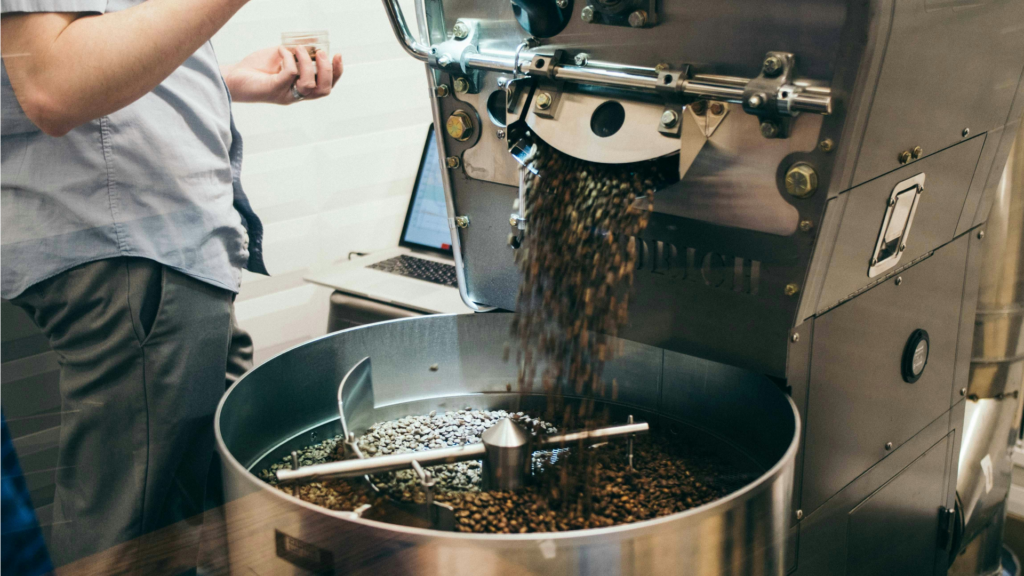
A coffee roaster standing in front of the roaster

Innovation

Innovative agricultural practices, trade models, and roasting technologies are strengthening coffee's resilience

A coffee farmer on his farm

Equity

Fair pricing and long-term partnerships with farmers help invest in coffee-growing communities